
Mon to Sat, 7:00am to 7:00pmNairobi, Kenya (moving clients countrywide)

+254 184 379 590info@kejapalmovers.co.ke

Moving tips and checklists

Packing Fragile Items for a Move: Glass, Mirrors, TVs and Art

Packing fragile items is the part of a move that worries people most. This guide shows how professional packers protect glasses, plates, mirrors, frames, TVs, lamps, ornaments and artwork, which materials to use, and how to load fragile boxes so they arrive without a crack.

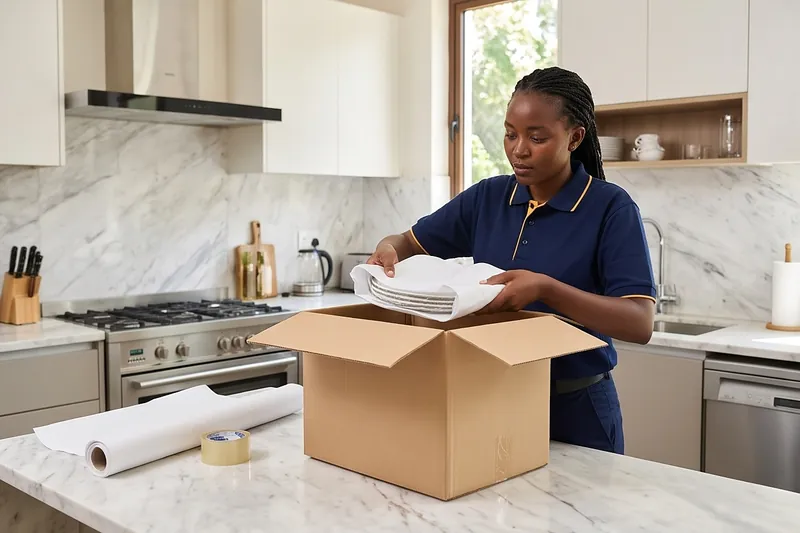
Packer wrapping plates in paper while packing fragile items for a move

Quick answer

Wrap every fragile item on its own, fill every gap so nothing moves and use strong, small boxes. Stand plates and frames on their edges, stuff glasses with paper, protect mirror corners and carry TVs upright. Mark fragile boxes clearly and load them last, on top of heavier boxes.

Most breakages in a move happen inside the box, not on the road. Items rattle against each other, boxes crush under weight or a single sheet of paper is all that stands between two plates. The good news is that a few simple habits prevent almost all of this. Packing fragile items well is not about expensive materials; it is about method.

If you would rather leave the fragile packing to us, our packing services can handle just the breakables while you pack the rest.

Packing

Materials for packing fragile items

  • Small and medium double-walled boxes. Small boxes stay light and strong.
  • Plain packing paper. Lots of it. It is cheaper than bubble wrap and works for most items.
  • Bubble wrap. For electronics, frames, glass and very delicate pieces.
  • Cardboard sheets and corner protectors. For mirrors, glass tops and frames.
  • Dish packs and glass dividers. Special boxes with cells for glasses and bottles.
  • Strong tape and a marker. To seal and label every box clearly.

Packing

The three rules of packing fragile items

  1. Wrap each item alone. First, no two fragile items should touch.
  2. Fill every gap. Next, crumpled paper fills the bottom, the sides and the top, so nothing moves when you shake the box gently.
  3. Keep boxes small and light. Finally, a small box is stronger and less likely to be dropped.

Packing fragile items for a move

Plates and bowls

Line the bottom of a box with a thick layer of crumpled paper. Wrap each plate in two or three sheets of paper. Then stand the plates on their edges, side by side, like records in a crate. Standing plates are far stronger than stacked ones. Bowls can nest in small stacks of three, with paper between each. Fill the gaps and add a layer of paper on top before sealing.

Packing fragile items for a move

Glasses and stemware

Stuff each glass with paper first, then wrap it from the outside. For wine glasses, wrap the stem separately with extra paper, because it is the weakest point. Pack glasses upright, never on their sides, and use a box with cell dividers if you can. Above all, never put heavy items on top of a box of glasses.

Packing breakables for moving with paper, bubble wrap and small boxes
Plenty of paper and small, strong boxes protect most fragile items.

Mirrors, frames and glass tops

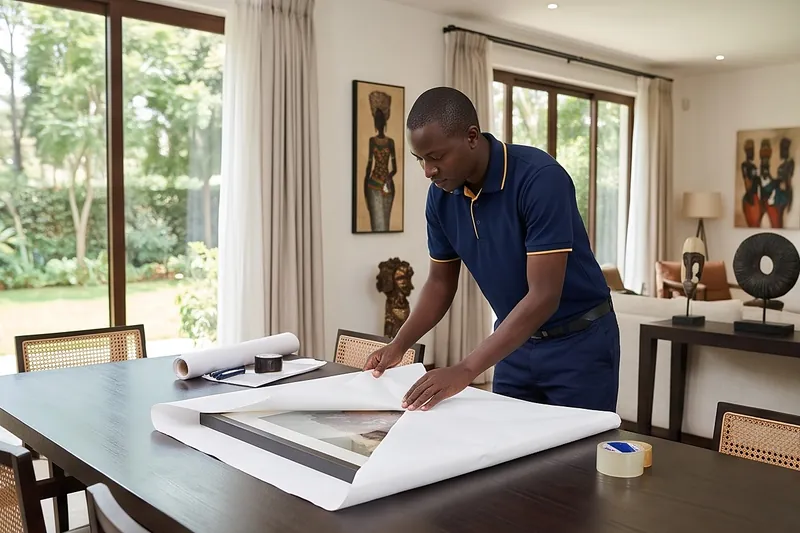
Put a cross of masking tape on mirror glass to help hold pieces together if it cracks. Next, fit corner protectors and wrap the item in bubble wrap. Then sandwich it between two sheets of cardboard and tape them together. For large mirrors and glass table tops, a custom cardboard frame or crate is best. Always carry and load them on their edges, never flat.

TVs and electronics

Use the original box if you still have it. Otherwise, wrap the TV in a moving blanket or bubble wrap, protect the screen with cardboard and carry it upright. Never lay a flat-screen TV on its face. For computers, speakers and consoles, photograph the cables first, then pack the devices with padding in snug boxes. Laptops and hard drives should travel with you. Our TV mounting team can take TVs off the wall and mount them again.

Lamps and lampshades

Remove bulbs and shades. Wrap the lamp base in paper and bubble wrap, and pack it in a box with padding. Pack lampshades on their own, in a box slightly bigger than the shade, with soft paper around them. Never crush shades into a box with other items, because they dent and tear easily.

Ornaments, vases and keepsakes

Stuff vases and hollow ornaments with paper, then wrap them twice. Wrap small figures with extra paper around thin parts such as handles, arms and spouts. Group similar items in small boxes, and fill every gap. Keepsakes that cannot be replaced, such as family heirlooms, are best carried with you. If they must go on the truck, pack them in a small, well-padded box, mark it clearly and tell the team leader which box it is.

Artwork and framed photos

Wrap canvases in acid-free paper or clean plastic, then add corner protectors and cardboard sheets. Framed photos and prints with glass should be packed like mirrors. For valuable art, ask your movers about custom crates. In addition, photograph valuable pieces before the move for your records and for any insurance claim.

Bottles, jars and kitchen appliances

Bottles and jars can leak as well as break. So tighten the lids, cover the openings with cling film and wrap each one in paper. Then pack them upright in a box with dividers or plenty of padding, inside a plastic bag in case of leaks. Small appliances, such as blenders, toasters and coffee makers, travel best in their original boxes. Otherwise, remove loose parts such as blades and glass jugs, wrap them separately and pack the base with padding. In addition, tape the appliance doors and lids shut so they do not swing open.

Plants and fish tanks

Plants and aquariums are fragile in a different way. Potted plants should travel in open boxes with paper around the pots, loaded last and unloaded first. Fish tanks must be emptied completely before they move, because water weight cracks the glass. Meanwhile, the fish travel in bags or containers of their own tank water, with you in the car. Once at the new home, set up the tank, refill it and let it settle before returning the fish. For large aquariums, ask your movers for help with the stand and the empty tank.

Labelling fragile boxes

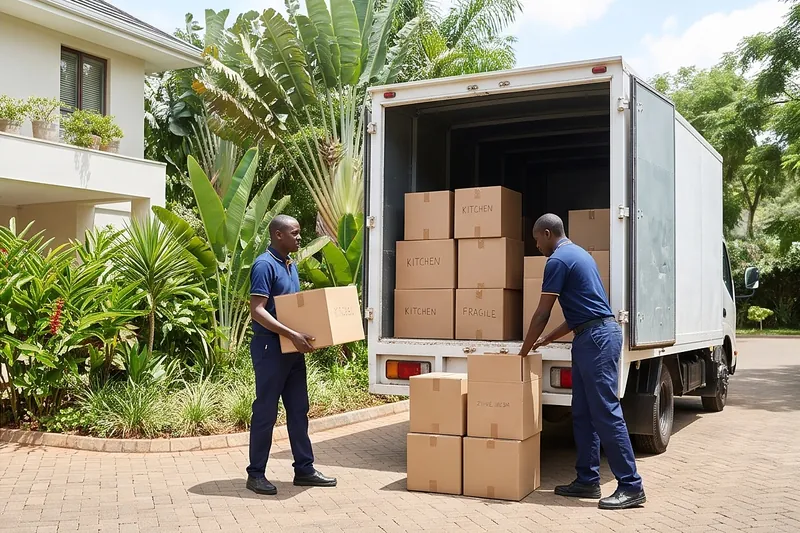
Write "FRAGILE" in large letters on the top and two sides of each box. Add arrows to show which way is up. Also write the room and the contents, such as "Kitchen, wine glasses". Clear labels tell the crew to carry the box gently, keep it upright and load it on top.

Loading fragile boxes on the truck

Heavy furniture and boxes go on the truck first, against the front wall. Fragile boxes go last, on top of heavier boxes and away from loose items. Mirrors and frames stand on their edges between mattresses or sofas. Finally, the load is strapped so nothing shifts on the road. These steps matter as much as the packing itself. Our crews load this way on every move, whether it is a short apartment move or a long trip across the country.

Packing fragile items for long-distance moves

Long trips mean more vibration, more hours and sometimes rough roads. Therefore add an extra layer of paper around each item and double the padding at the bottom of each box. Use stronger boxes and seal every seam. For very valuable or delicate items, consider custom crates. Our long-distance movers pack for these routes every week.

Packing

Common mistakes when packing fragile items

  • Using newspaper, which stains, instead of plain paper.
  • Stacking plates flat instead of standing them on edge.
  • Leaving gaps that let items rattle.
  • Using large boxes that become too heavy.
  • Forgetting to label fragile boxes clearly.
  • Packing the TV flat or without screen protection.

Insurance and valuables

For high-value items, consider goods-in-transit insurance. Photograph valuable pieces before the move, list them on the inventory and keep receipts or valuations. The Insurance Regulatory Authority lists licensed insurers in Kenya. Jewellery, cash and important documents should never go on the truck; carry them yourself.

How long fragile packing takes

Packing fragile items takes longer than any other part of packing. A typical kitchen can take a full day for one person. As a result, many clients ask our packers to do the kitchen and fragile items while they pack clothes and books. A team of packers can usually pack a whole kitchen in a few hours.

Need help with fragile items?

If the thought of packing your grandmother's china keeps you awake, let our packers handle it. They bring all the materials and pack every breakable piece by hand. Request a moving quote and tell us which rooms or items you want packed. For the full packing method, read our guide on how to pack for moving.

A note on moving prices

We do not publish fixed prices, because every move is different. Instead, we assess each move, send a written quote and agree the final price with you, so the figure you agree reflects your real move. If you are working to a budget, tell us early. Then we can suggest options, such as packing some boxes yourself, moving mid-month or sharing a truck on long routes.

Get started

Get your moving quote

Tell us what you are moving and where, and our move coordinator will call you back within one working day to plan it with you.

  • Clear, itemised written quote
  • Packing, transport and setting up from one team
  • Careful crew, padded and wrapped furniture

Prefer to talk? Call +254 184 379 590

We reply within one working day. Or call +254 184 379 590.

Frequently asked questions

What is the best material for packing fragile items?

Plain packing paper works for most items. Add bubble wrap for electronics, glass and very delicate pieces.

Should plates be packed flat or on their side?

On their edges, side by side, like records in a crate. This makes them much stronger than stacking them flat.

How do I pack a flat-screen TV without the original box?

Wrap it in a moving blanket or bubble wrap, protect the screen with cardboard and always carry and load it upright.

Where should fragile boxes go on the truck?

Load them last, on top of heavier boxes and away from loose items, with the load strapped so nothing shifts.

Planning a move?

Tell us what you are moving and where. We will check the load in person or on a video call, give you a clear written quote and plan moving day with you.

CallWhatsAppAsk usQuote